My Ireland


Oops... no internet connection
While offline, you can still add items to My board. New travel reccomendations will only show up once you’re back online.
Items without a physical location are not shown in map view.
Looks like your board is empty


Collection cover image
Visible to people you share your board with











Location access
- View offers and deals nearby
- Find travel inspiration based on your location
- Get local weather forecasts and essential information








Travel times
Tell us when you are travelling to Ireland and we'll show you tailored reccomendations during of your trip.


- Recommended events during your stay
- Helpful travel reminders and updates
Privacy
We take your privacy very seriously and only ever process your data with your permission. If possible this is handled anonymously and we will never store your data for longer than is required. For more information on how we handle your personal data, please read our privacy policy.
Remove data
To securely remove all data associated with your profile, please contact our Data Protection Officer.
Reset your board
This will remove all the items you have previously liked from your board. Please note, you can’t undo this action.
User
Location access
- View offers and deals nearby
- Find travel inspiration based on your location
- Get local weather forecasts and essential information
Travel times
Tell us when you are travelling to Ireland and we'll show you tailored reccomendations during of your trip.
- Recommended events during your stay
- Helpful travel reminders and updates
Reset your board
This will remove all the items you have previously liked from your board. Please note, you can’t undo this action.


Irish craft on the global stage


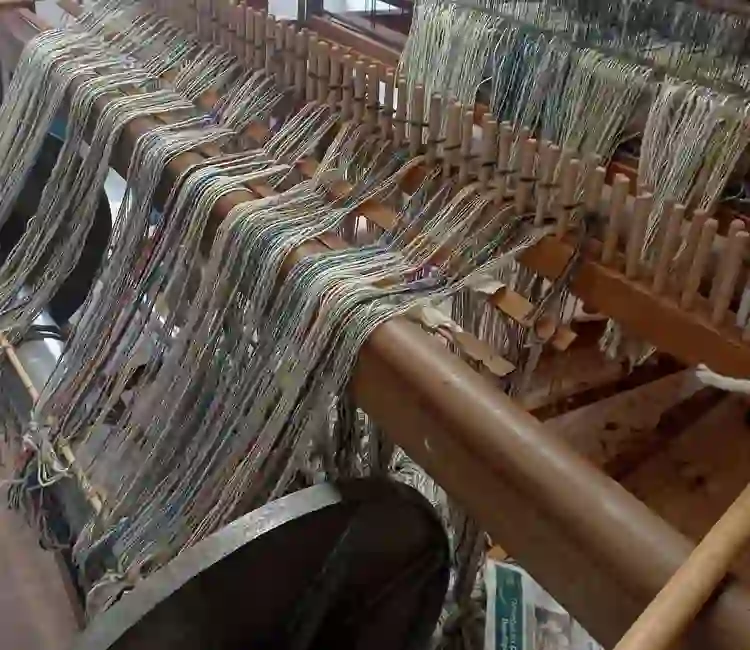
Irish craft and design is having a moment. Fresh and innovative fashion and design events, including Ireland Fashion Week and Irish Design Week, are showcasing Irish designers and brands, but the shift is perhaps most visible in the work itself. Drawing on centuries of tradition, designers are revisiting Ireland’s heritage techniques and materials to create pieces that are modern, relevant and cool.
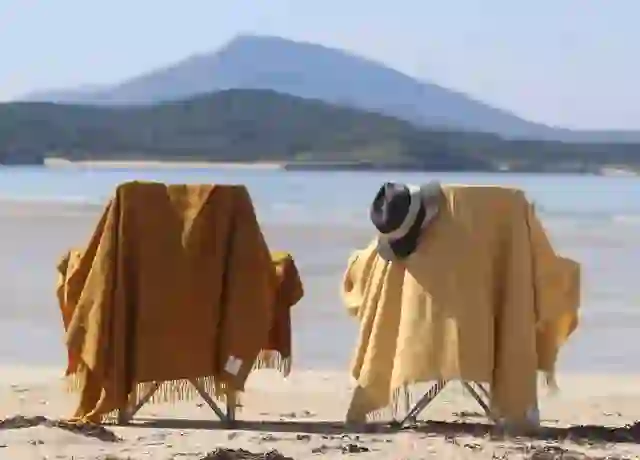
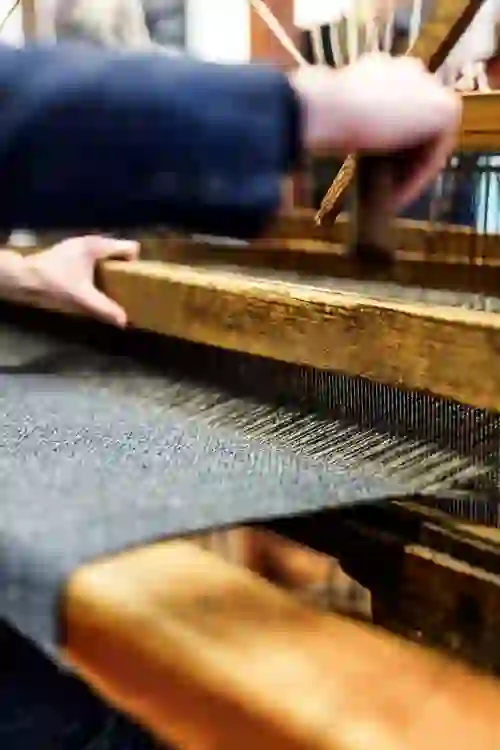
Donegal Tweed has long been an icon of Irish style. Famously elevated by legendary Irish designer Sybil Connolly in the 1950s, it has, over the past decade, found its way back into the collections of some of the world’s most influential designers – reimagined with a resolutely contemporary edge. Now it’s the turn of lace.
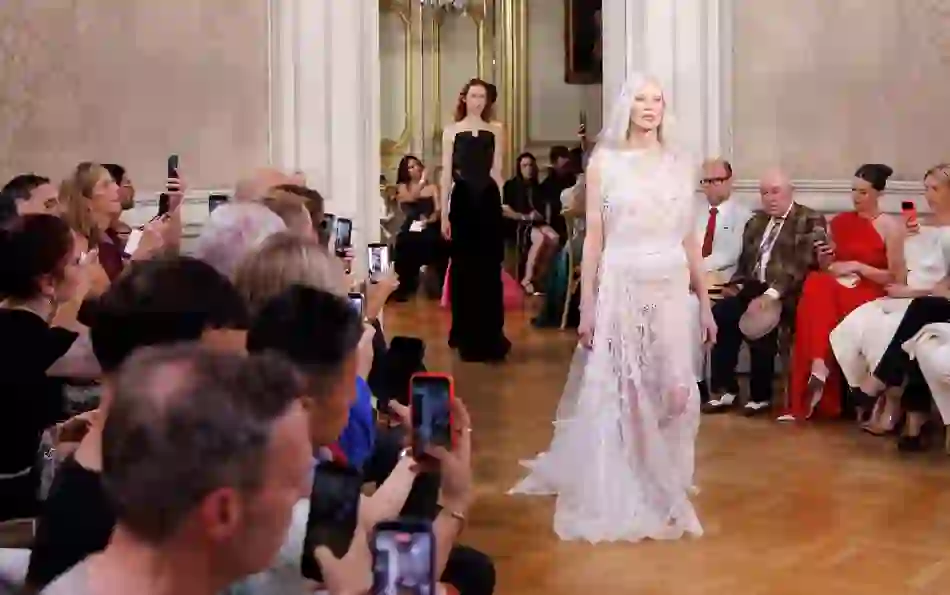
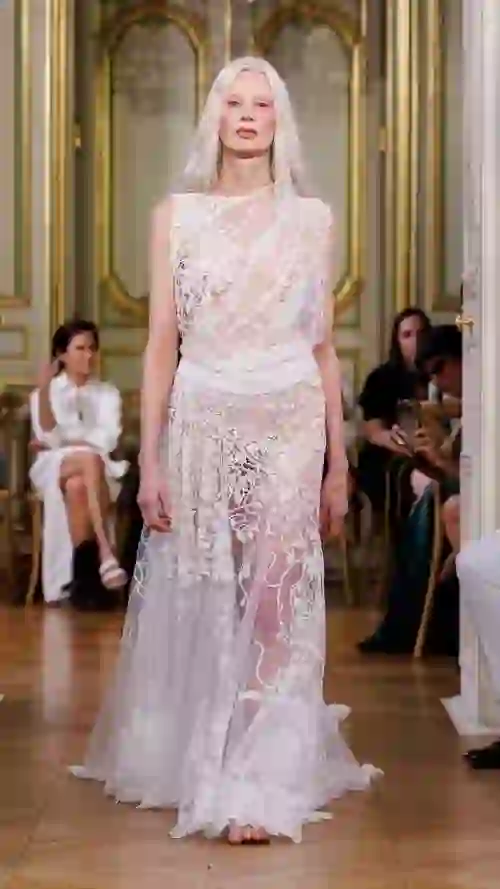
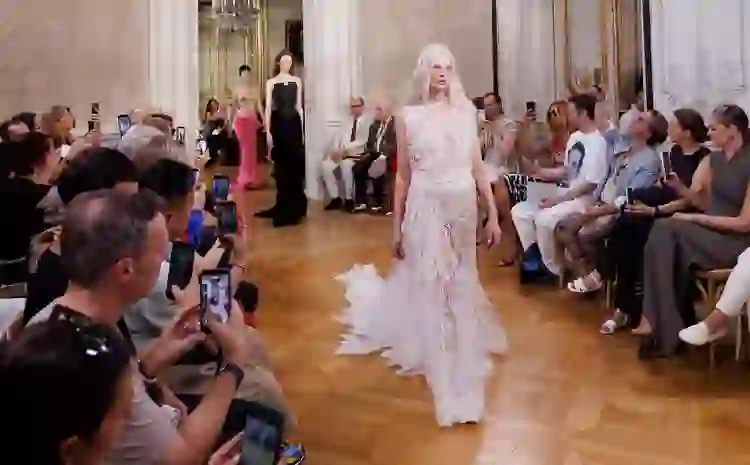
In sumptuous surroundings at the Irish Embassy in Paris in 2026, a gown stunned audiences with its craftsmanship and beauty. It was the Paris Haute Couture debut for fashion label Standing Ground, founded by Michael Stewart. Exquisitely handcrafted from Carrickmacross lace, the dress was delicate, precise and otherworldly – a centuries-old craft tradition transformed into something strikingly contemporary.

Standing Ground and Carrickmacross lace
Michael Stewart studied at both the Limerick School of Art and Design and the Royal College of Art before establishing Standing Ground in 2022. In 2024, the label was awarded the LVMH Savoir Faire Prize for its commitment to craft. With exceptional attention to proportion, silhouette and material, Standing Ground places centuries-old traditions and histories in dialogue with envisioned futures, and the Carrickmacross lace gown presented in Paris was a powerful expression of its philosophy.
“Showing at Haute Couture in Paris offered a way for me to engage with Irish heritage and craftsmanship in a contemporary way,” said Stewart. “With support from Tourism Ireland, I am able to widen international visibility to Ireland’s rich textile history and specifically the Carrickmacross lace and the Monaghan-based artisans that continue to sustain the traditions.”

Known for its delicate beauty, Carrickmacross lace has a history that dates back to the 1820s, and its style and development is attributed to Margaret Grey Porter. Inspired by the Italian guipure lace she had seen on her honeymoon, she and her maid Ann Steadman (an accomplished needlewoman) developed the lacemaking technique and began teaching it in the area around Carrickmacross, where it quickly became an important source of income for local women.
In its 200-year-history, it has gained a reputation for its exquisite craftsmanship, and Standing Ground’s Carrickmacross lace gown is an homage to centuries of skill passed down quietly from one enterprising woman to another. More than 5,000 hours of work by 26 lacemakers went into the creation of the piece – a reflection of the elite needlework and expertise of its crafters, some of whom have been creating lace for more than eight decades.
Renowned French fashion documentarian Loïc Prigent is known for his witty, behind-the-scenes films about the fashion industry and his deep knowledge of haute couture. When he travelled to Monaghan to uncover the story behind the Standing Ground gown, he met the dedicated group of Carrickmacross lacemakers whose craftsmanship brought Michael Stewart's design to life.
Aged between 21 and 95, these women took on the challenge of creating the Standing Ground lace with artistry, humour and patience – one crafter estimates she spent 552 hours on the piece. Seeing their lace, and the culture and heritage imbued in each stitch, grace the Paris catwalk is a source of immense pride. For Theresa Kelly, the moment represents a new chapter in the story of Carrickmacross lace. “It’s just magical,” she says. “This is putting it back on the map again and bringing it back into the absolute pinnacle of couture work.”
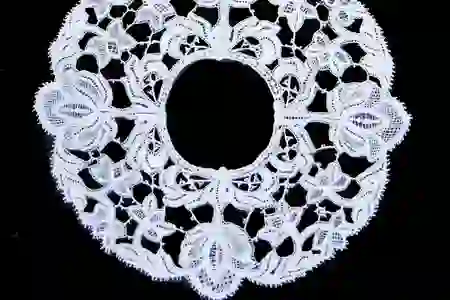
There are broadly two styles involved in the production of contemporary Carrickmacross lace. One is an appliquéd lace which is made by applying fine organdie to a backing of delicate net, and the other is a guipure lace – an open-work lace made without the net layer.
“The guipure work for the Standing Ground gown created an open, almost floating, sculptural effect,” says fashion designer and educator Natalie B Coleman, who co-ordinated the project for Standing Ground. “Up close you can see the buttonhole and eyelet stitching, the tiny, raised seed stitches and lattice filling.”
Tradition is embedded into the gown, as Natalie explains. “Within the design there are beautifully named traditional stitches such as the pheasant’s eye, the honeycomb, the cobweb, the spider’s eye and the pops, which are embossed circles. Each and every stitch is done by hand, employing skills that have taken years to build.”
But innovation is there too – the designs were based on Stewart’s hand-drawn motifs of shamrocks, blackberries, twisting brambles, dandelion leaves and dragonflies.
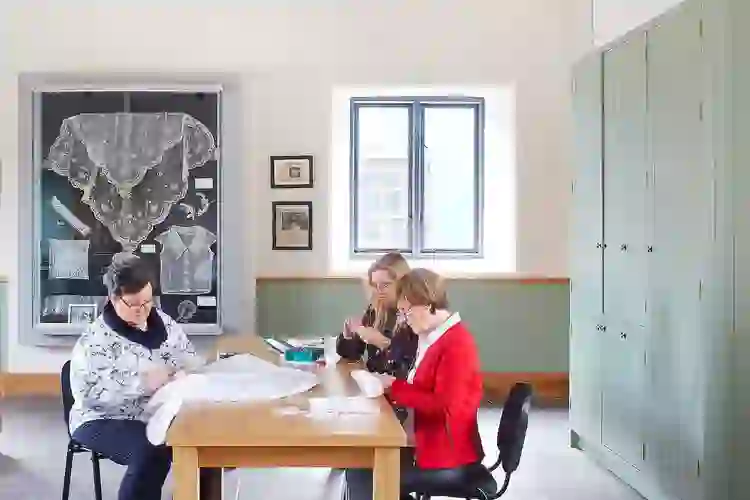

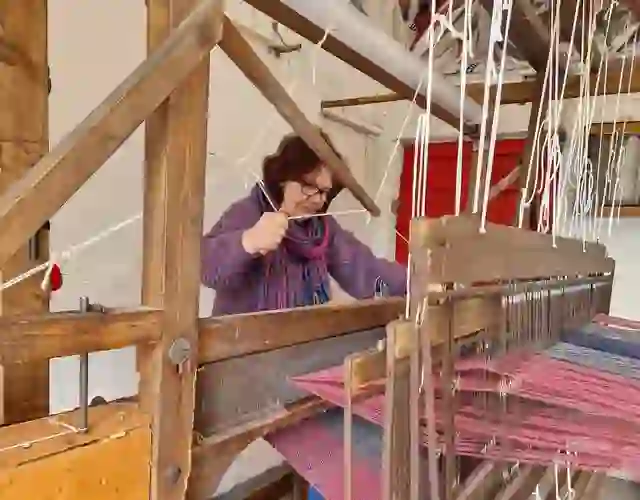
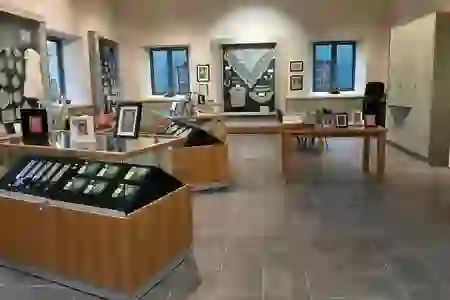
The Carrickmacross Lace Gallery in County Monaghan is the contemporary home of this treasured Irish last tradition. Here visitors can experience the craft first-hand, as well as meet the people who both communicate its history and create beautiful, contemporary pieces of lace for today. For the craft-curious visitors, it offers the chance to witness examples of historical and contemporary lace. There are lacemaking demonstrations and workshops that delve into the story of the lace’s development across 200 years of its history.
In the 19th century, lacemaking was an important source of rural income; indeed, it even contributed to the survival of many local families during the Great Famine between 1845 and 1852. The tradition may have died out were it not for the Sisters of St Louis who established a convent in Carrickmacross in 1888. The nuns taught the local primary school children lacemaking techniques and later established the St Louis Lace School, of which Queen Victoria was once a distinguished customer.
Today, the makers of Carrickmacross lace – along with Donegal tweed – are seeking special geographical protection for their products under new EU rules. It’s a protection that will help guarantee the cultural and commercial future of the heritage textiles they skillfully produce.

Ireland’s contemporary craft and design scene
For visitors to Ireland, Carrickmacross town is just one destination among many for those interested in craft and design; and Carrickmacross lace is just one story within a much larger picture – one in which craft, culture, community and place are woven together as naturally as the brambles of the Standing Ground dress.
As explored by Vogue columnist and creator Verona Farrell in a collaborative campaign with British Vogue, Ireland’s distinctive landscapes, materials and craft traditions continue to inspire work that feels both deeply rooted and decidedly of the moment.
Join Verona Farrell on a craft tour of County Kerry
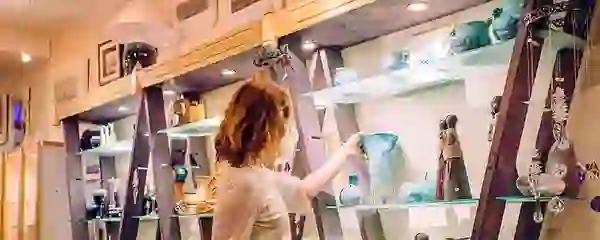
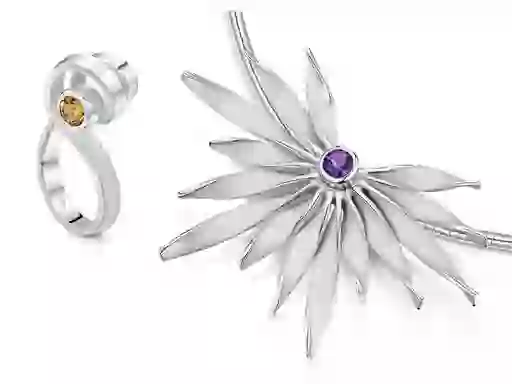
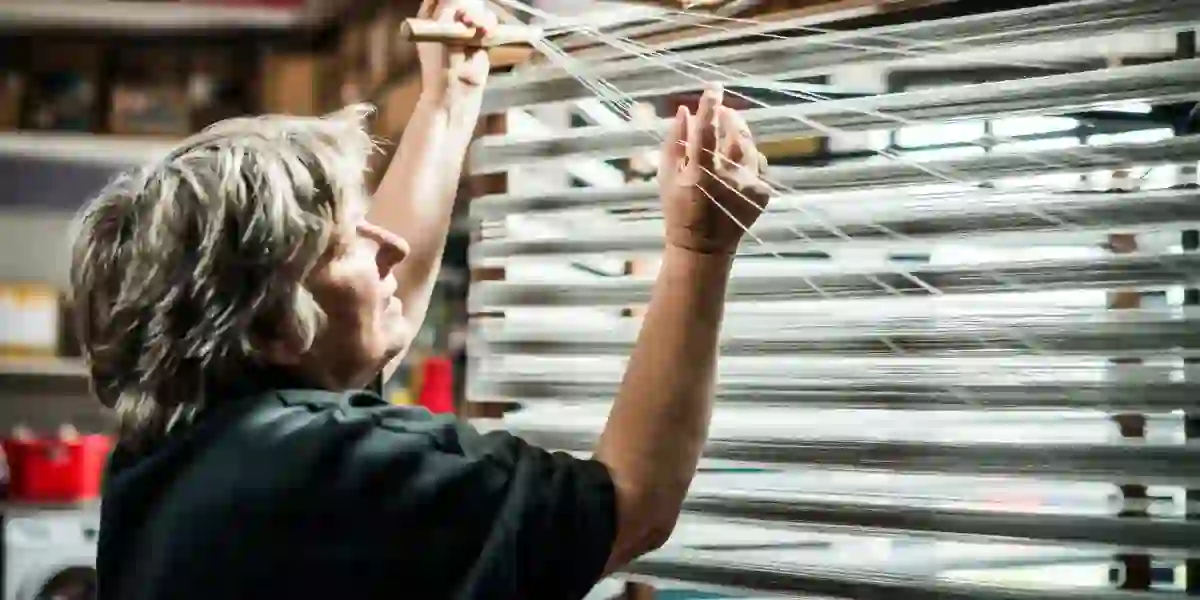
Across the island, the studios of lacemakers and tweed weavers, glass blowers and potters, goldsmiths and basket makers, bladesmiths and bookbinders offer visitors the chance to discover the people and the places behind Ireland’s most storied products.
What connects them is not simply tradition, but a shared instinct to keep Irish craft alive. From Jonathan Anderson at Dior to Simone Rocha, and from Seán McGirr at McQueen to Michael Stewart at Standing Ground, a new generation of creative talent is making its mark on the world stage.
On thing, though, remains certain: whether it’s on the runways of Paris or in a small pottery studio in County Kerry, the story of Irish making is still being written by hand.
Explore Ireland's craft scene
Discover the people, places and traditions behind Ireland's crafts