



Go to My Ireland
logo-mini

Are you sure you want to leave the feed?

Oops... something went wrong!

My Ireland

Looking for inspiration? Planning a trip? Or just want to scroll yourself happy? We'll show you an Ireland that's tailor-made for you.

  • #Landscapes
  • #CultureandHeritage
  • #OutdoorActivities
  • #Landmarks
MyICallOut_FindTheThings_EN_Desk_Above-Left MyICallOut_FindTheThings_EN_Desk_Above-Left

Oops... no internet connection

While offline, you can still add items to My board. New travel reccomendations will only show up once you’re back online.

    See what Ireland has in store for you

    Oops... no internet connection

    While offline, you can still add items to My board. New travel reccomendations will only show up once you’re back online.

    My board

    Look out for the little heart icon around Ireland.com. Simply tap the heart to add items to your board!

    Emptyboard Emptyboard

    Wicklow Mountains National Park reveals Ireland at its most soulful.

    White map of the island of Ireland, outlined in green, with County Wicklow highlighted.

    Wicklow Mountains National Park reveals Ireland at its most soulful.

    1
    Explore the largest national park on the island of Ireland, spanning almost 23,000 hectares.
    2
    Enjoy nine waymarked trails, from the 1km Poulnass and St Kevin’s Cell route to the 130km Wicklow Way.
    3
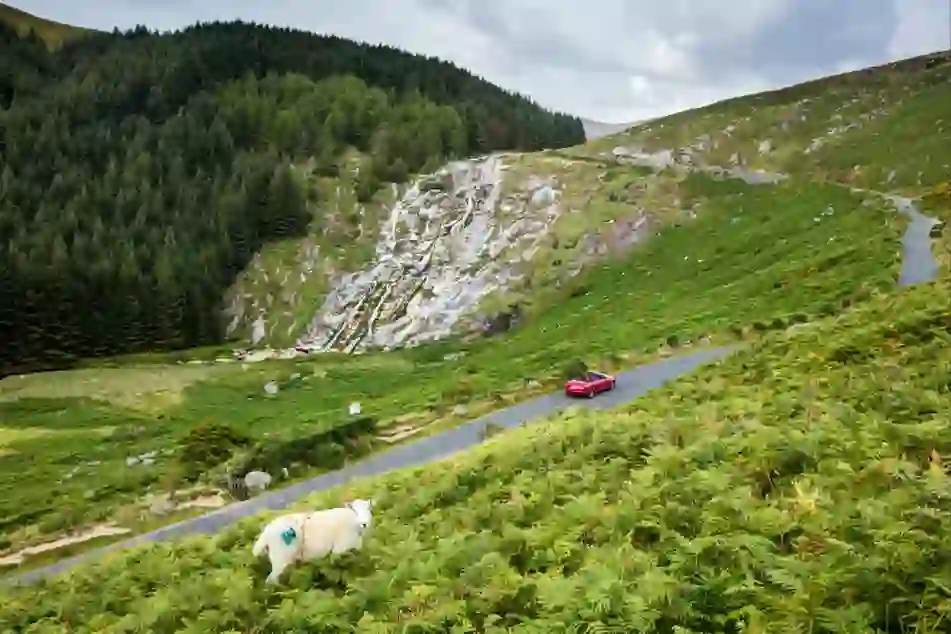
    Take to the Great Military Road, constructed in the early 19th century, which covers 58km of spectacular sights including Glenmacnass Waterfall.

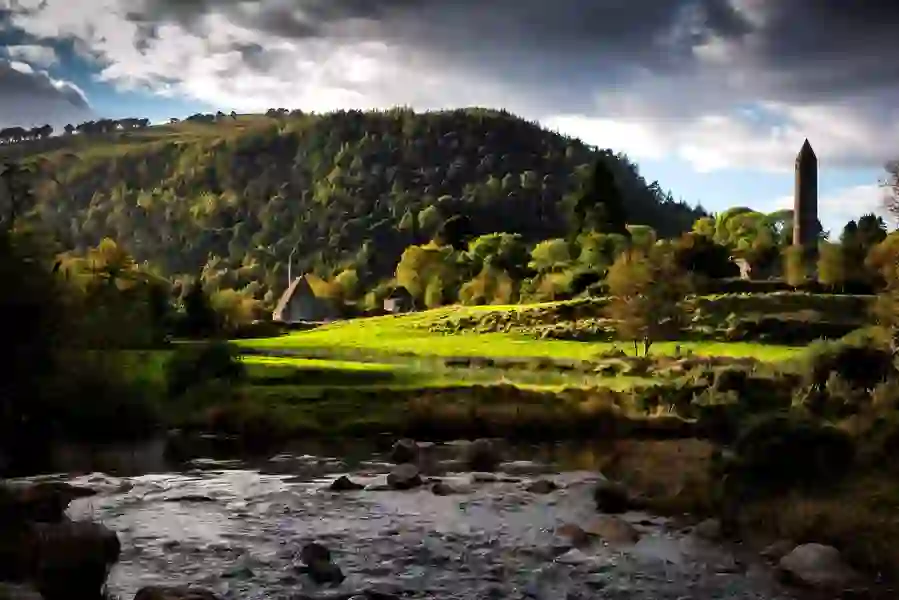
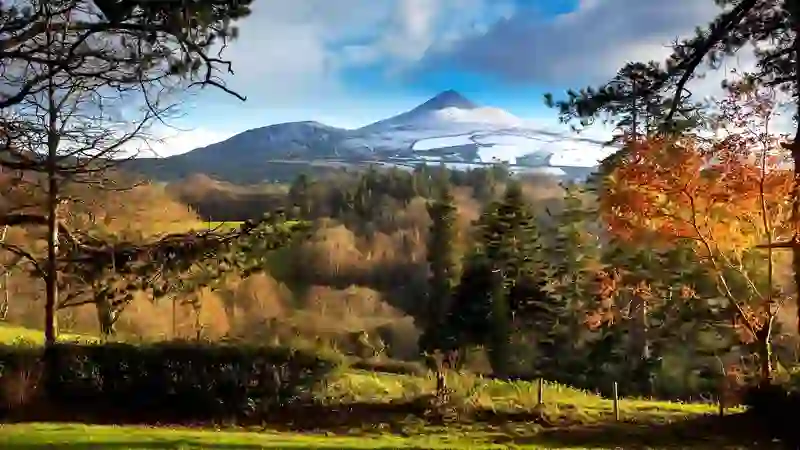
    With its snow-dusted peaks, enchanting forests and rushing streams, the Wicklow Mountains National Park offers some of the most captivating landscapes in Ireland. Just a short distance from Dublin, this vast protected area is the perfect escape into nature. Sweeping vistas of tobacco-toned hills unfold at every turn, while the calls of rutting stags and the bleating of wild goats remind you that this is nature’s playground. Whether you plan to hike tranquil trails, wander through time at the enchanting 6th-century monastic site of Glendalough, or enjoy lunch at an 18th-century coaching inn, the Wicklow Mountains offer a unique blend of wild beauty and timeless charm.

    Spinc boardwalk trail above Upper Lake in Wicklow Mountains National Park, County Wicklow. Spinc boardwalk trail above Upper Lake in Wicklow Mountains National Park, County Wicklow.

    Spinc trail, Glendalough, County Wicklow

    Marco Hansel for Tourism Ireland


    Wicklow Mountains walks and highlights

    The Wicklow Mountains are a playground for outdoor adventurers – this is one of the best places on the island of Ireland for a short stroll or longer hike. Glendalough is a go-to for walkers, with nine waymarked trails that take you from gentle forest routes to pulse-quickening hikes. Tackle the magnificent Spinc (9.5km), and you’ll encounter the haunting ruins of an old miner’s village, before passing through heather-flecked hills and on to a mountain ridge that boasts jaw-dropping views over the glacial lake below. Keep an eye out for wildlife along the way – the park is home to mammals including Sika deer, rabbits, goats, foxes, badgers and pine martens. Paid parking is available at both the Upper and Lower lake, and the national park’s information office is located 200m from the Upper Lake car park.

    There are also three long-distance walking routes that pass through Wicklow Mountains National Park including the Wicklow Way (130km), St Kevin’s Way (30km) and the Miner’s Way (19km). Maps are available on the National Parks website and at the OPW Visitor Centre at Glendalough.

    Discover six inspirational walks around Ireland

    Take to the road

    While walking is the best way and most immersive way to experience the raw beauty and haunting historic sites of the park, the Great Military Road offers an equally memorable perspective. Constructed between 1801 and 1809, the 58km route passes through Wicklow’s moody blanket bog habitat and takes in landmarks including the glacial valley of Glencree, Sally Gap with its spectacular views of Lough Tay, and the romantic Glenmacnass Waterfall.

    You can drive the entire route or if you’re short on time, there are circular looped sections to enjoy. You can also just drive the Sally Gap route, which is 26km long and one of the most scenic passes through the mountains, taking in sections of the Great Military Road.

    Food and drink near Wicklow Mountains National Park

    Of course, Wicklow’s beauty is best enjoyed outdoors and picnics are a popular option here – perfect for lunch with the ultimate view. But those who head inside will find plenty of cosy pubs and restaurants where fires crackle and pints slowly settle. You’ll find country hotels tailor-made for slow, indulgent afternoons, and cafés serving hearty soups and homemade soda bread. Looking for the perfect post-hike destination? Try The Coach House in Roundwood village, a restored 1820s coach house with log fires, craft beers and a super-friendly welcome, the 17th-century Roundwood Inn, or pick up a sandwich to take away at the Roundwood Stores. The Wicklow Heather is a popular spot that’s well-liked for its rustic charm and great food and if you’re visiting Glendalough, Casey’s Bar & Bistro at the Glendalough Hotel is a well-located spot for casual food. 

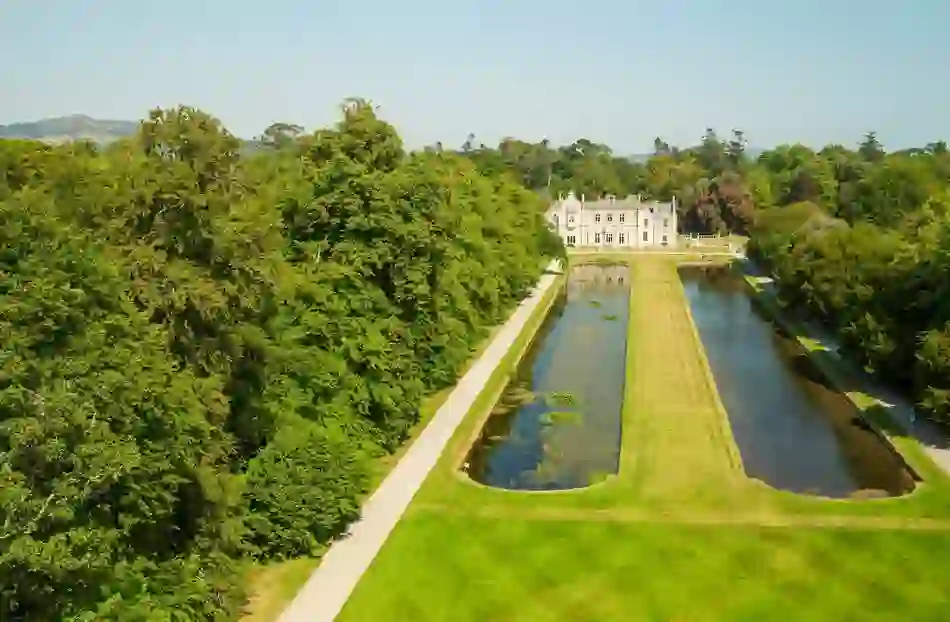
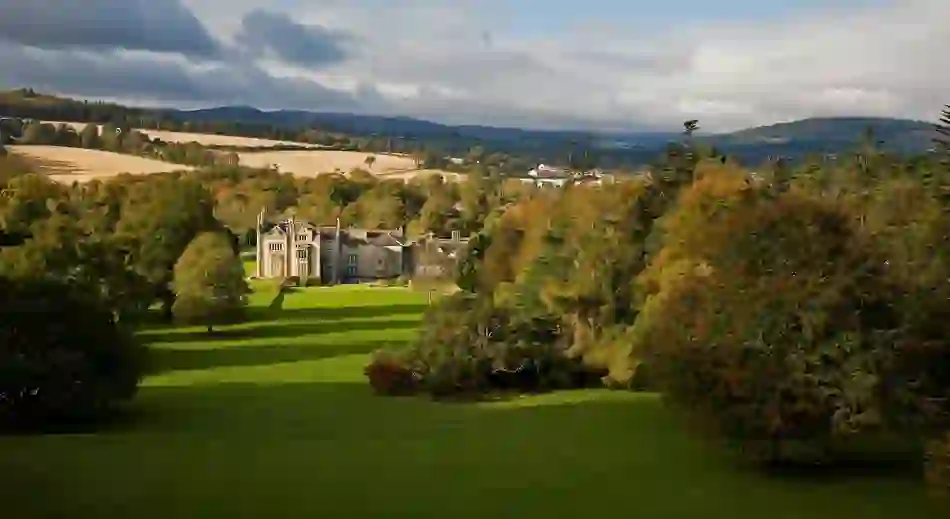
    Powerscourt Estate and gardens reflected in a tranquil lake beneath the Wicklow Mountains, County Wicklow. Powerscourt Estate and gardens reflected in a tranquil lake beneath the Wicklow Mountains, County Wicklow.

    Powerscourt Estate, County Wicklow


    Beyond Wicklow Mountains National Park

    If you’re looking to explore more of Wicklow, then a visit to Powerscourt Estate, House and Gardens is a must. This gracious estate is set on the eastern edge of the national park. The gardens, with their cascading green terraces, magnificent statues and manicured lawns, have been voted number three in the world’s Top 10 Gardens by National Geographic. Feel like wandering farther afield? Powerscourt Waterfall, Ireland’s highest, is about 5km away – the perfect reminder that Wicklow’s wild side is always close by. Whiskey lovers should head to the award-winning Powerscourt Distillery for an immersive tour and tasting.

    More garden delights await at Mount Usher Gardens in Ashford – one of Ireland's most celebrated garden destinations. Set across 22 acres along the River Vartry, the gardens were designed by Irish horticulturalist William Robinson, whose free-flowing, naturalistic approach to garden design became known as Robinsonian. Mount Usher Gardens has become known as one of the world’s best examples of the style and boasts more than 5,000 species of nature and exotic plants set along the banks of the River Vartry.

    A Palladian beauty

    For sumptuous interiors, it’s hard to beat the 18th-century Russborough House, set in the rolling County Wicklow countryside near the Blessington Lakes. Step inside this stately home and you’ll be wowed with lavish furnishings, exquisite craftsmanship and incredible stucco plasterwork. In 1952, Sir Alfred and Lady Beit bought Russborough and set about installing one of the most esteemed private art collections on the island. Today, the guided tour brings visitors around the house where some of these paintings still hang in beautifully ornate surroundings.

    Inspired by the Wicklow Mountains? Continue your adventure through County Wicklow and explore the history, culture and beautiful landscapes that make this part of Ireland’s Ancient East so special.

    White map of the island of Ireland, outlined in green, with County Wicklow highlighted.

    Plan your visit

    Wicklow

    from

    Check out the official website for the latest details on opening hours, prices, booking and more.
    Visit website
    Experience as part of:
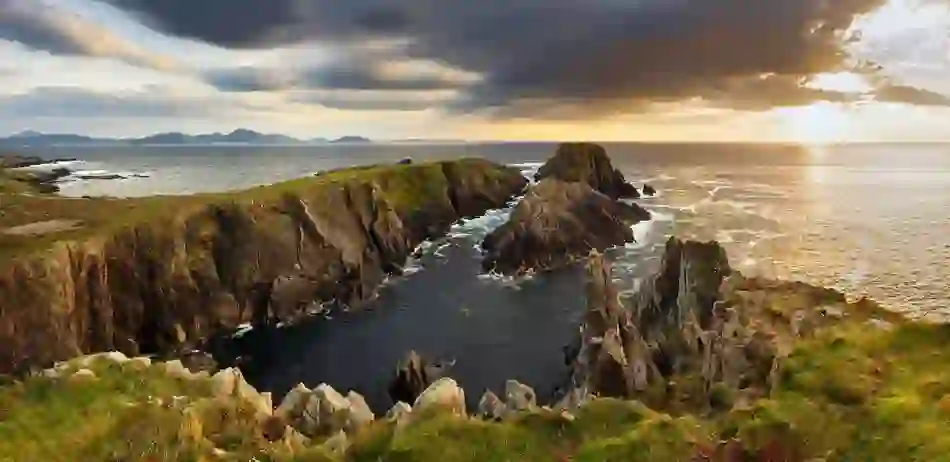
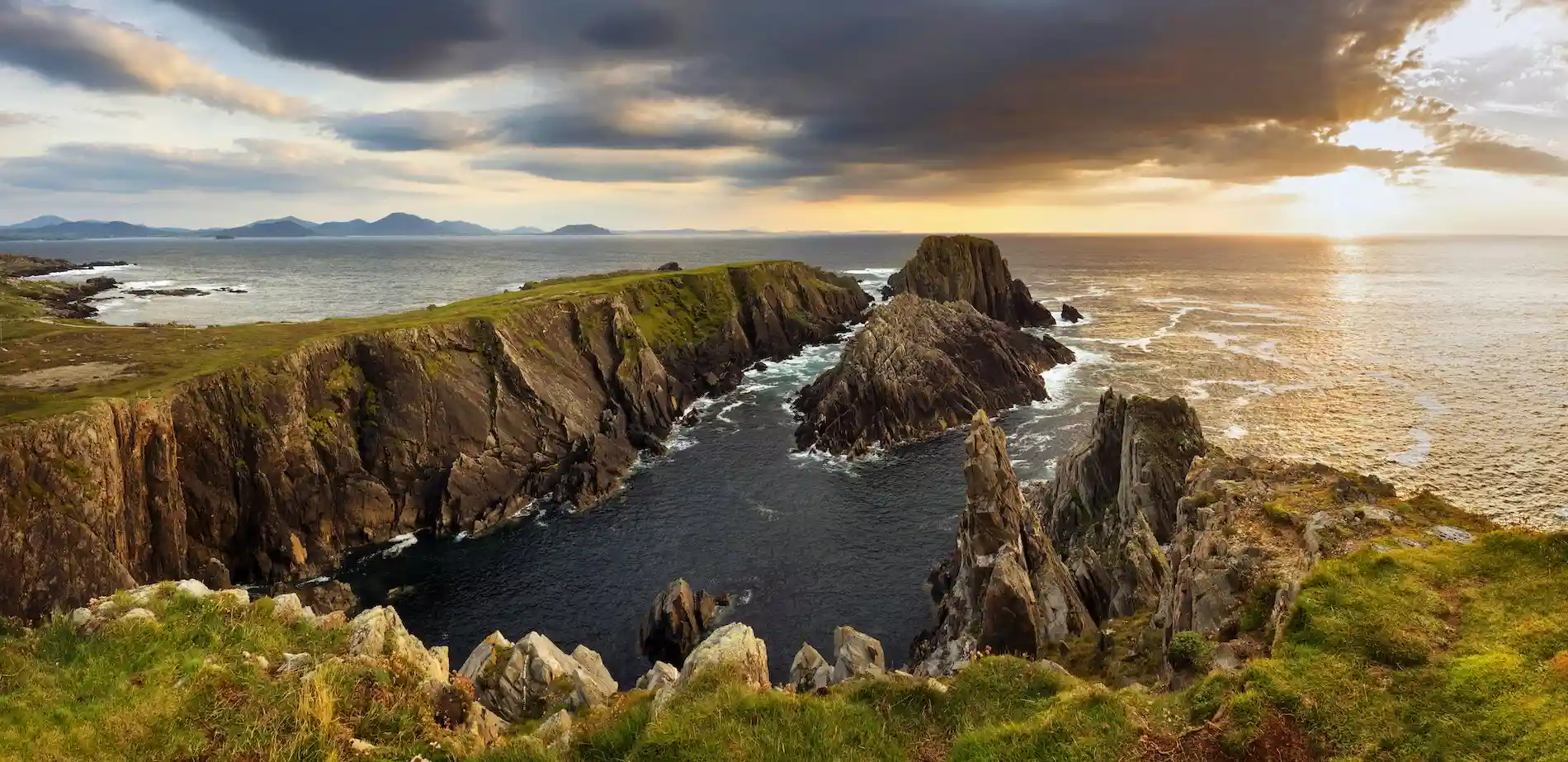
    Dramatic rocky cliffs and headlands on the Dingle Peninsula, featured in Star Wars: The Last Jedi filming. Dramatic rocky cliffs and headlands on the Dingle Peninsula, featured in Star Wars: The Last Jedi filming.
    county-wicklow-wicklow-mountains-national-park-walkers county-wicklow-wicklow-mountains-national-park-walkers
    To drive south of Dublin and cross into County Wicklow is to be confronted, almost immediately, with some of the most soaring, timeless scenery the Emerald Isle has to offer. National Geographic
    Wicklow Mountains National Park FAQs
    Where are the Wicklow Mountains?

    The Wicklow Mountains are located in County Wicklow in the eastern part of the island of Ireland. They take up most of the centre of the county and extend into parts of County Dublin. You can enjoy great views of the Wicklow Mountains from the Clara Vale Nature Reserve, as well as on the White Hill and Djouce walking routes.

    How high are the Wicklow Mountains?

    The highest point in the Wicklow Mountains is Lugnaquilla, which has a peak of 925 metres. While the mountains may not be as high as many European mountains, they are exceptionally beautiful with their rolling peaks, magnificent glacial valleys and deep-blue lakes.

    What is the most famous mountain in Wicklow?

    The most famous mountain in Wicklow is Lugnaquilla, which stands at 925 metres. Known locally as “the Lug”, the mountain is a difficult one to climb and it’s not advised because there are no marked routes. Djouce Mountain is an easier climb, while still being graded strenuous. It stands at 725 metres and although it does not have a marked route, there are tracks to follow.

    What was filmed in the Wicklow Mountains?

    Given its remarkable beauty, it’s no surprise that Wicklow is one of the most popular filming destinations on the island of Ireland. Many films and TV series have been shot in the wider county, but the Wicklow Mountains have provided an epic backdrop to films such as Reign of Fire, starring Christian Bale, romantic dramas such as PS I Love You and epic TV series such as Vikings.

    How long does it take to do the Sally Gap drive?

    The Sally Gap is one of two east-to-west passes through the Wicklow Mountains. It follows part of the Great Military Road and scenic stops along the way include Lough Tay and Glenmacnass Waterfall. It is only 26km, but you should allow at least an hour to complete the route, as the roads are winding and the views are magnificent. If you want to stop off at sights along the way – such as Glenmacnass Waterfall and viewing points for Lough Tay – allow more time. If you’re wondering why it’s called the Sally Gap, it’s thought that the name comes from the Irish word for the sallow tree – a small willow tree that was once common throughout the area.
    How far are the Wicklow Mountains from Wicklow town?

    That very much depends on what part of the Wicklow Mountains you want to access. One of the most popular destinations in the Wicklow Mountains is the 6th-century monastic site, which lies about 30km from Wicklow town and is accessible via bus number 183, which has a journey time of around 50 minutes. To reach Wicklow town from Dublin, take the Dublin-Rosslare Europort InterCity train, which takes around 1hr 10 minutes.

    How far are the Wicklow Mountains from Dublin?

    It depends on what part of the Wicklow Mountains you plan to visit. Glendalough is one of the most popular destinations and is about 65km from Dublin city. You can reach the Wicklow Mountains by public transport from Dublin using St Kevin’s Bus services to Glendalough. There are also public bus and train services, but they take longer.

    The Sally Gap drive is about 40km from Dublin city and takes about an hour to reach by car from the city centre, depending on traffic.