



Go to My Ireland
logo-mini

Are you sure you want to leave the feed?

Oops... something went wrong!

My Ireland

Looking for inspiration? Planning a trip? Or just want to scroll yourself happy? We'll show you an Ireland that's tailor-made for you.

  • #Landscapes
  • #CultureandHeritage
  • #OutdoorActivities
  • #Landmarks
MyICallOut_FindTheThings_EN_Desk_Above-Left MyICallOut_FindTheThings_EN_Desk_Above-Left

Oops... no internet connection

While offline, you can still add items to My board. New travel reccomendations will only show up once you’re back online.

    See what Ireland has in store for you

    Oops... no internet connection

    While offline, you can still add items to My board. New travel reccomendations will only show up once you’re back online.

    My board

    Look out for the little heart icon around Ireland.com. Simply tap the heart to add items to your board!

    Emptyboard Emptyboard

    Embark on a relaxing escape to one of Ireland’s under-the-radar gems – County Roscommon.

    Tucked away in Ireland’s Hidden Heartlands, County Roscommon is something of a well-kept secret – a tranquil oasis with plenty to entertain. This is a landscape that lulls you into a sense of relaxation, with peaceful lakes and rolling hills, forested country parks and large estates steeped in history. Explore the shores of Lough Key, wander through the ruins of the 12th-century Boyle Cistercian Abbey, or delve into the depths of the earth at the Arigna Mining Experience. You’ll find that Roscommon is an unhurried destination that rewards the time you spend exploring it.
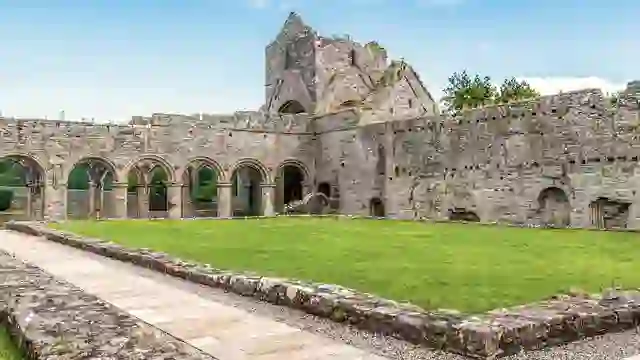
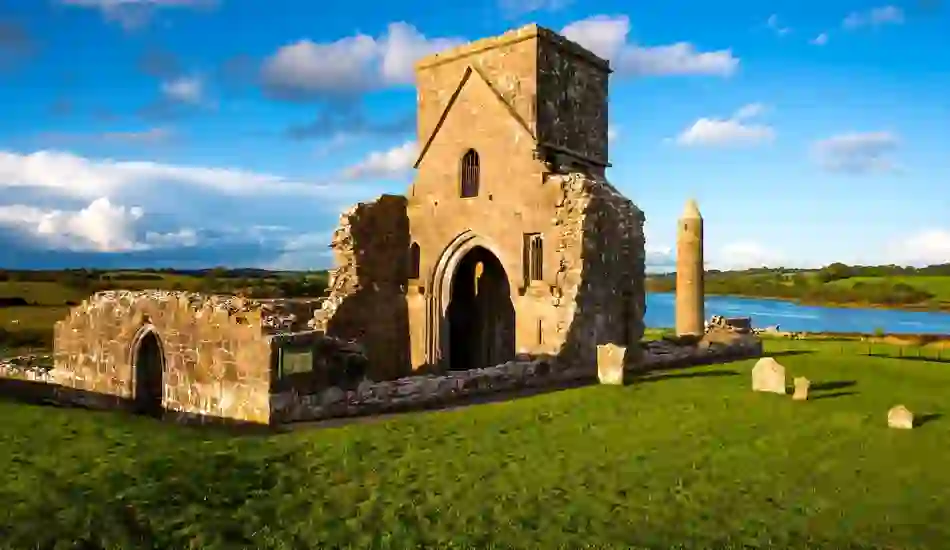
    Medieval stone arches and ruins at Boyle Abbey in County Roscommon. Medieval stone arches and ruins at Boyle Abbey in County Roscommon.

    Boyle Abbey, County Roscommon

    © Shutterstock

    County Roscommon attractions

    County Roscommon’s unique history has led to some interesting sites, museums and landmarks around the county. Look out for the distinctive mix of Romanesque and Gothic features of Boyle Abbey, a classic example of the School of the West architecture.

    Stroll across nearby 12th-century Abbeytown Bridge, one of the oldest stone bridges in Ireland. Then discover four centuries of history at King House, a beautifully restored Georgian mansion.

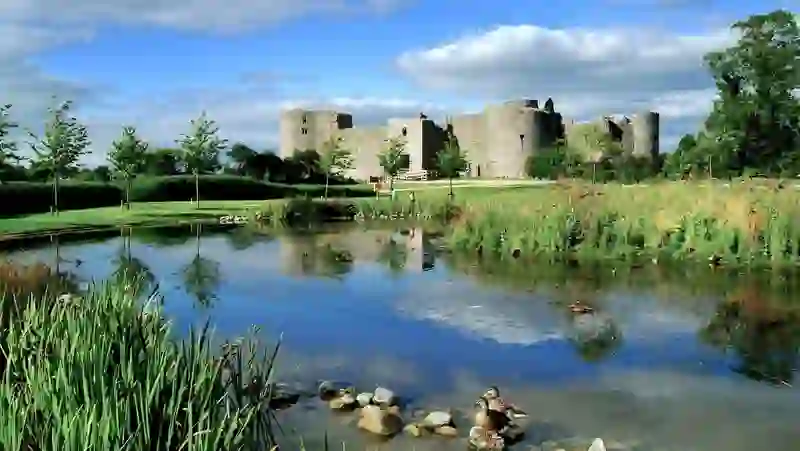
    In Roscommon town, you’ll find the imposing towers of 13th-century Roscommon Castle, an Anglo-Norman fortress that became a seat of power for the O’Connor kings of Connacht. 

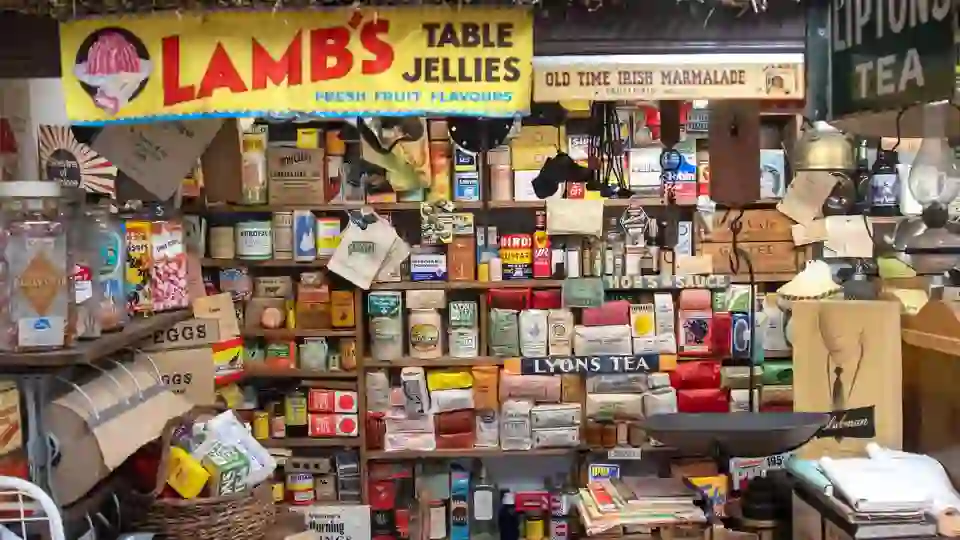
    Just a short drive away is fascinating Derryglad Folk & Heritage Museum. Here, you’ll be transported back in time through the everyday objects of rural life in Ireland, such as farm machinery, trades, tools and memorabilia.

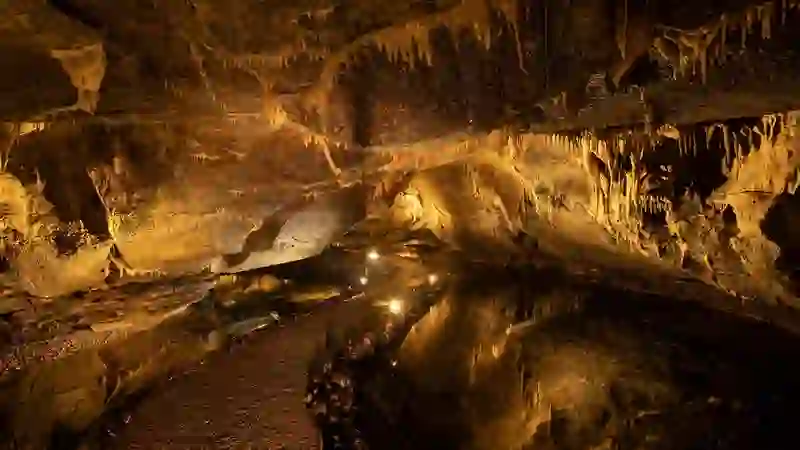
    A totally different experience is on offer at the Arigna Mining Experience. Descend deep into the earth and uncover the stories of the local men who sustained their communities from the 1700s through to the late 1900s. The compelling tour shows you the cramped conditions the men worked in before the mine finally closed in 1990.

    Discover more of Ireland’s underground attractions

    Famine history in County Roscommon

    The National Famine Museum at Strokestown House explores the parallel lives of the hungry tenants and their landlord who governed them during the tragic period of the Great Famine of Ireland.

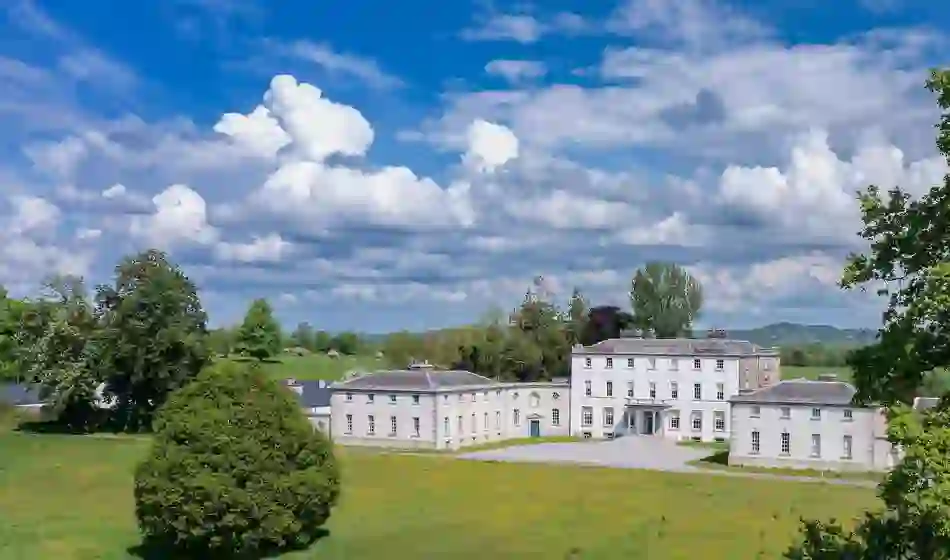
    Take a tour of Strokestown House to discover centuries-old rooms that offer a vivid insight into how the landed gentry once lived. Below stairs, the 18th-century galleried kitchen is one of the last preserved of its kind in Ireland.
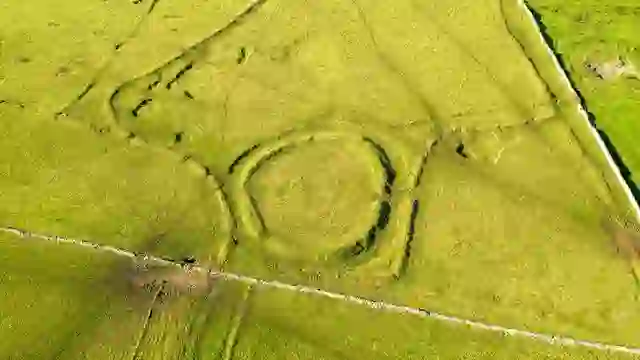
    Aerial view of the ancient earthworks and burial mounds at Rathcroghan in County Roscommon. Aerial view of the ancient earthworks and burial mounds at Rathcroghan in County Roscommon.

    Rathcroghan Royal Site

    Courtesy Fáilte Ireland

    Roscommon’s mythological sites

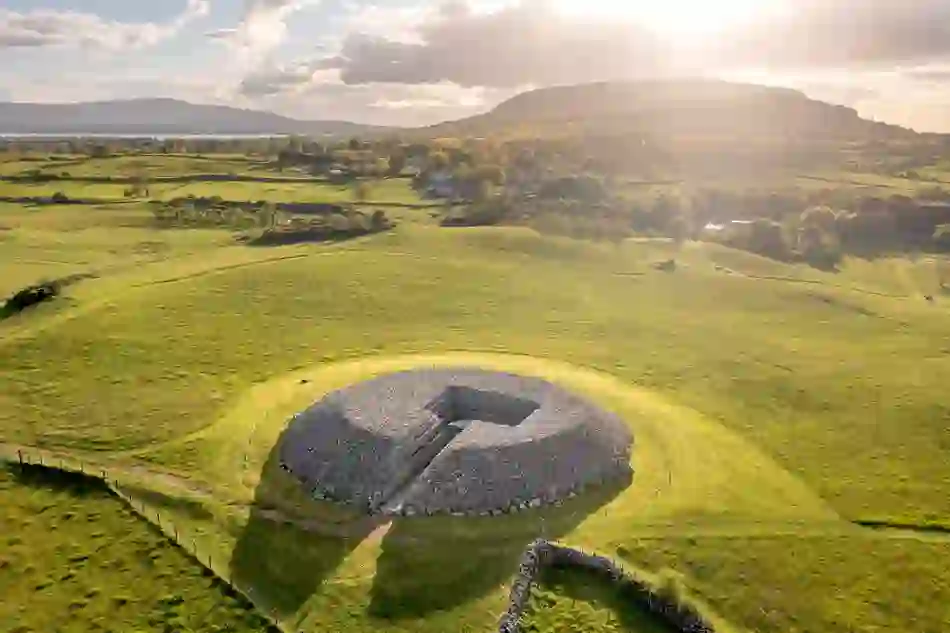
    The standout star of County Roscommon has to be the Royal Site of Rathcroghan. This archaeological site is steeped in Irish mythology and has witnessed over 5,500 years of history. 

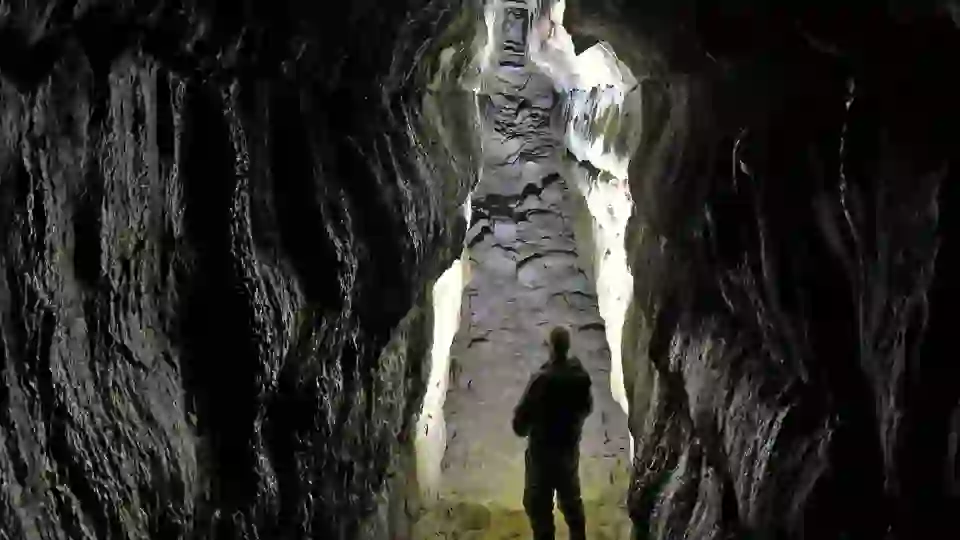
    At the visitor centre, you can learn about the history of Rathcroghan, where experts have discovered artefacts stretching back to the Bronze and Iron Ages. They’ve also found medieval settlements, standing stones, burial mounds, ringforts and even the “Gate to Hell”, Oweynagat (Cave of the Cats).

    Uncover Irish myths and legends and where to find them

    Back to nature in County Roscommon

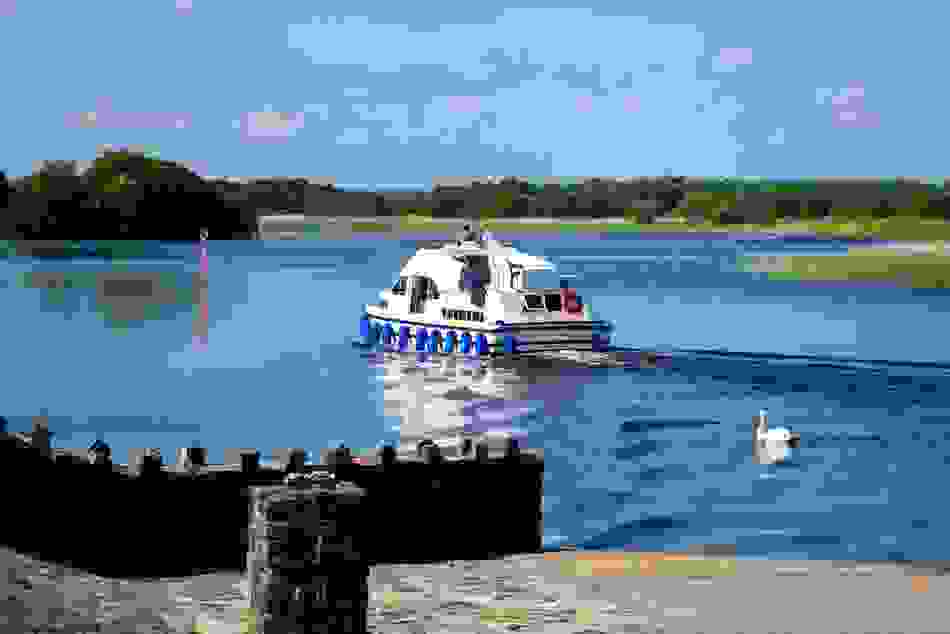
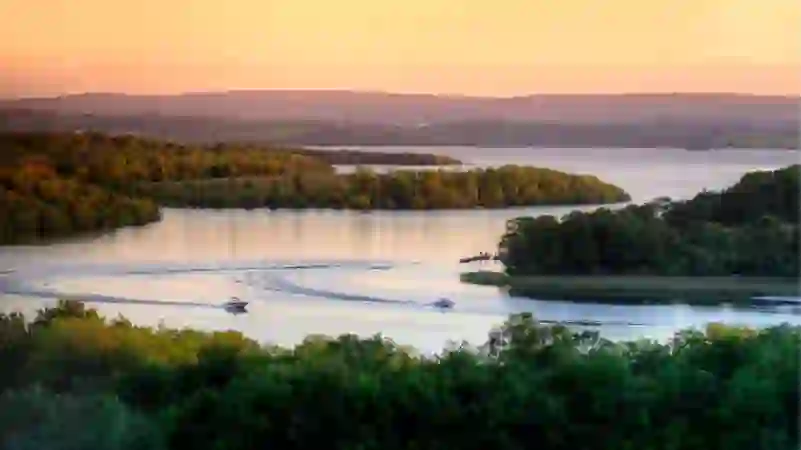
    And finally, lovers of the great outdoors are in for a treat in County Roscommon. It may not have a coastline, but it does have 32 islands! Sail and cruise boats glide around Lough Ree, and rivers like the Shannon and the Suck are enticing locations for anglers.

    At the heart of the county lies Lough Key, surrounded by 350 hectares of woodland; the old Rockingham family’s 19th-century estate has today been transformed into a fantastic forest park. 

    Walkers, meanwhile, should opt for the Miners Way & Historical Trail, which connects with neighbouring counties Leitrim and Sligo. Some of these paths would have been used by miners on their way to and from work. While the route itself is 66km long, it can be walked in sections.

    Discover great walks in Ireland’s Hidden Heartlands
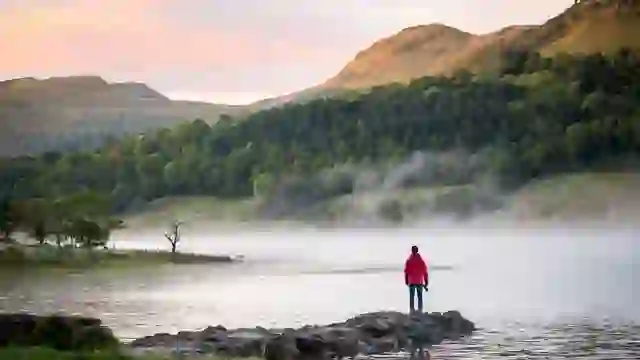
    Visitor overlooking misty Glencar Lake, County Leitrim, surrounded by wooded hills and mountains. Visitor overlooking misty Glencar Lake, County Leitrim, surrounded by wooded hills and mountains.

    Glencar Lake, County Leitrim

    Beyond County Roscommon

    County Roscommon is bordered by seven counties. This means that it’s perfect for continuing your journey through Ireland’s Hidden Heartlands, or venturing into Ireland’s Ancient East or the Wild Atlantic Way.

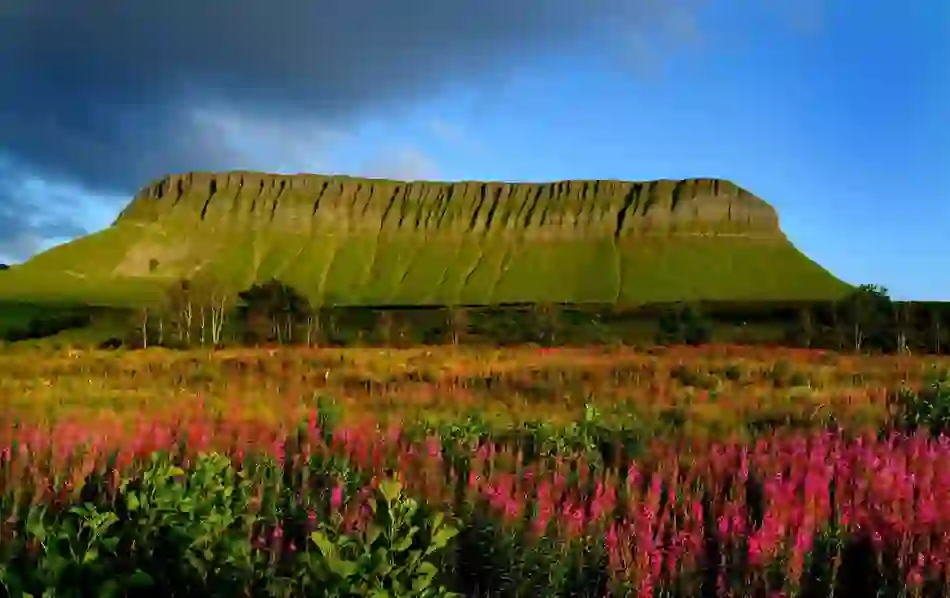
    A great option is to pair it with a visit to Sligo and Leitrim, both of which sit to the north. In Sligo, the landscape itself tells stories, from the landmark tabletop mountain Ben Bulben to the Knocknarea and Ox mountains. Poet WB Yeats found the scenery here such an inspiration that he immortalised it in his work. 

    The county is also famous for its surfing culture and the buzzy villages of Strandhill and Enniscrone have drawn holidaymakers for generations. Both villages also have very different expressions of another deeply traditional aspect of Sligo’s culture: therapeutic seaweed bathing.

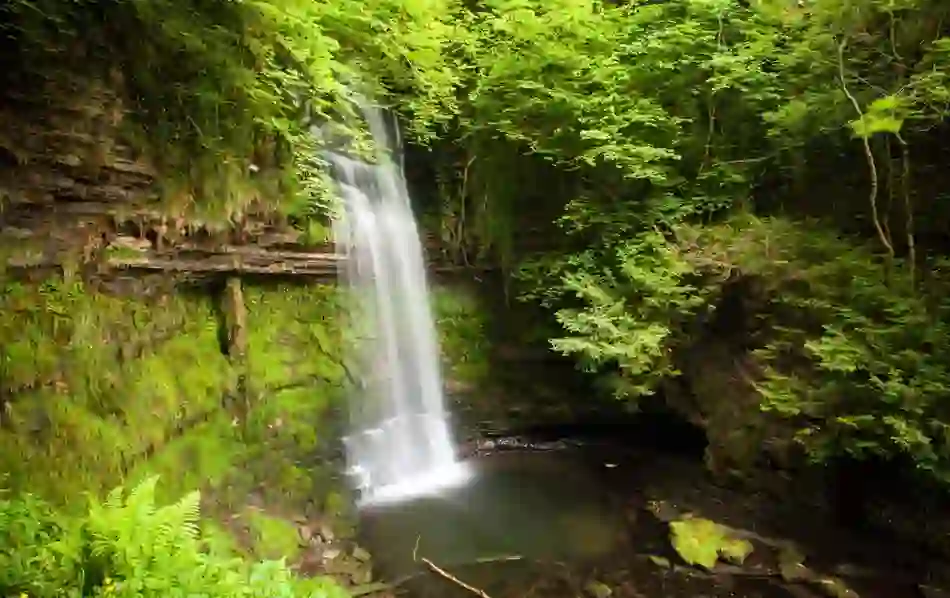
    County Leitrim’s beauty is just as legendary, with Glencar Waterfall being a particular highlight. Like something out of a fairy tale, the cascade pours 15 metres down from moss-covered rocks into a pool surrounded by ferns. The water then flows into scenic Glencar Lake, a short walk away.

    To explore more of Leitrim, follow the Shannon-Erne Waterway by boat, kayak or bicycle. Explore the mountainous landscapes with great walking trails around Sliabh an Iarainn. Or go back in time at the dramatically beautiful Parke’s Castle, a remarkable fortress house overlooking the wind-ruffled waters of Lough Gill.

    From the historic treasures of County Roscommon to the quiet waters of County Leitrim, your Ireland’s Hidden Heartlands adventure starts here. Get planning today.

    Read more

    Tucked away in Ireland’s Hidden Heartlands, County Roscommon is something of a well-kept secret – a tranquil oasis with plenty to entertain. This is a landscape that lulls you into a sense of relaxation, with peaceful lakes and rolling hills, forested country parks and large estates steeped in history. Explore the shores of Lough Key, wander through the ruins of the 12th-century Boyle Cistercian Abbey, or delve into the depths of the earth at the Arigna Mining Experience. You’ll find that Roscommon is an unhurried destination that rewards the time you spend exploring it.

    Medieval stone arches and ruins at Boyle Abbey in County Roscommon. Medieval stone arches and ruins at Boyle Abbey in County Roscommon.

    Boyle Abbey, County Roscommon

    © Shutterstock

    County Roscommon attractions

    County Roscommon’s unique history has led to some interesting sites, museums and landmarks around the county. Look out for the distinctive mix of Romanesque and Gothic features of Boyle Abbey, a classic example of the School of the West architecture.

    Stroll across nearby 12th-century Abbeytown Bridge, one of the oldest stone bridges in Ireland. Then discover four centuries of history at King House, a beautifully restored Georgian mansion.

    In Roscommon town, you’ll find the imposing towers of 13th-century Roscommon Castle, an Anglo-Norman fortress that became a seat of power for the O’Connor kings of Connacht. 

    Just a short drive away is fascinating Derryglad Folk & Heritage Museum. Here, you’ll be transported back in time through the everyday objects of rural life in Ireland, such as farm machinery, trades, tools and memorabilia.

    A totally different experience is on offer at the Arigna Mining Experience. Descend deep into the earth and uncover the stories of the local men who sustained their communities from the 1700s through to the late 1900s. The compelling tour shows you the cramped conditions the men worked in before the mine finally closed in 1990.

    Discover more of Ireland’s underground attractions

    Famine history in County Roscommon

    The National Famine Museum at Strokestown House explores the parallel lives of the hungry tenants and their landlord who governed them during the tragic period of the Great Famine of Ireland.

    Take a tour of Strokestown House to discover centuries-old rooms that offer a vivid insight into how the landed gentry once lived. Below stairs, the 18th-century galleried kitchen is one of the last preserved of its kind in Ireland.

    Aerial view of the ancient earthworks and burial mounds at Rathcroghan in County Roscommon. Aerial view of the ancient earthworks and burial mounds at Rathcroghan in County Roscommon.

    Rathcroghan Royal Site

    Courtesy Fáilte Ireland

    Roscommon’s mythological sites

    The standout star of County Roscommon has to be the Royal Site of Rathcroghan. This archaeological site is steeped in Irish mythology and has witnessed over 5,500 years of history. 

    At the visitor centre, you can learn about the history of Rathcroghan, where experts have discovered artefacts stretching back to the Bronze and Iron Ages. They’ve also found medieval settlements, standing stones, burial mounds, ringforts and even the “Gate to Hell”, Oweynagat (Cave of the Cats).

    Uncover Irish myths and legends and where to find them

    Back to nature in County Roscommon

    And finally, lovers of the great outdoors are in for a treat in County Roscommon. It may not have a coastline, but it does have 32 islands! Sail and cruise boats glide around Lough Ree, and rivers like the Shannon and the Suck are enticing locations for anglers.

    At the heart of the county lies Lough Key, surrounded by 350 hectares of woodland; the old Rockingham family’s 19th-century estate has today been transformed into a fantastic forest park. 

    Walkers, meanwhile, should opt for the Miners Way & Historical Trail, which connects with neighbouring counties Leitrim and Sligo. Some of these paths would have been used by miners on their way to and from work. While the route itself is 66km long, it can be walked in sections.

    Discover great walks in Ireland’s Hidden Heartlands

    Visitor overlooking misty Glencar Lake, County Leitrim, surrounded by wooded hills and mountains. Visitor overlooking misty Glencar Lake, County Leitrim, surrounded by wooded hills and mountains.

    Glencar Lake, County Leitrim

    Beyond County Roscommon

    County Roscommon is bordered by seven counties. This means that it’s perfect for continuing your journey through Ireland’s Hidden Heartlands, or venturing into Ireland’s Ancient East or the Wild Atlantic Way.

    A great option is to pair it with a visit to Sligo and Leitrim, both of which sit to the north. In Sligo, the landscape itself tells stories, from the landmark tabletop mountain Ben Bulben to the Knocknarea and Ox mountains. Poet WB Yeats found the scenery here such an inspiration that he immortalised it in his work. 

    The county is also famous for its surfing culture and the buzzy villages of Strandhill and Enniscrone have drawn holidaymakers for generations. Both villages also have very different expressions of another deeply traditional aspect of Sligo’s culture: therapeutic seaweed bathing.

    County Leitrim’s beauty is just as legendary, with Glencar Waterfall being a particular highlight. Like something out of a fairy tale, the cascade pours 15 metres down from moss-covered rocks into a pool surrounded by ferns. The water then flows into scenic Glencar Lake, a short walk away.

    To explore more of Leitrim, follow the Shannon-Erne Waterway by boat, kayak or bicycle. Explore the mountainous landscapes with great walking trails around Sliabh an Iarainn. Or go back in time at the dramatically beautiful Parke’s Castle, a remarkable fortress house overlooking the wind-ruffled waters of Lough Gill.

    From the historic treasures of County Roscommon to the quiet waters of County Leitrim, your Ireland’s Hidden Heartlands adventure starts here. Get planning today.

    Read more
    Experience as part of:

    Embark on a relaxing escape to one of Ireland’s under-the-radar gems – County Roscommon.

    Tucked away in Ireland’s Hidden Heartlands, County Roscommon is something of a well-kept secret – a tranquil oasis with plenty to entertain. This is a landscape that lulls you into a sense of relaxation, with peaceful lakes and rolling hills, forested country parks and large estates steeped in history. Explore the shores of Lough Key, wander through the ruins of the 12th-century Boyle Cistercian Abbey, or delve into the depths of the earth at the Arigna Mining Experience. You’ll find that Roscommon is an unhurried destination that rewards the time you spend exploring it.

    Medieval stone arches and ruins at Boyle Abbey in County Roscommon. Medieval stone arches and ruins at Boyle Abbey in County Roscommon.

    Boyle Abbey, County Roscommon

    © Shutterstock

    County Roscommon attractions

    County Roscommon’s unique history has led to some interesting sites, museums and landmarks around the county. Look out for the distinctive mix of Romanesque and Gothic features of Boyle Abbey, a classic example of the School of the West architecture.

    Stroll across nearby 12th-century Abbeytown Bridge, one of the oldest stone bridges in Ireland. Then discover four centuries of history at King House, a beautifully restored Georgian mansion.

    In Roscommon town, you’ll find the imposing towers of 13th-century Roscommon Castle, an Anglo-Norman fortress that became a seat of power for the O’Connor kings of Connacht. 

    Just a short drive away is fascinating Derryglad Folk & Heritage Museum. Here, you’ll be transported back in time through the everyday objects of rural life in Ireland, such as farm machinery, trades, tools and memorabilia.

    A totally different experience is on offer at the Arigna Mining Experience. Descend deep into the earth and uncover the stories of the local men who sustained their communities from the 1700s through to the late 1900s. The compelling tour shows you the cramped conditions the men worked in before the mine finally closed in 1990.

    Discover more of Ireland’s underground attractions

    Famine history in County Roscommon

    The National Famine Museum at Strokestown House explores the parallel lives of the hungry tenants and their landlord who governed them during the tragic period of the Great Famine of Ireland.

    Take a tour of Strokestown House to discover centuries-old rooms that offer a vivid insight into how the landed gentry once lived. Below stairs, the 18th-century galleried kitchen is one of the last preserved of its kind in Ireland.

    Aerial view of the ancient earthworks and burial mounds at Rathcroghan in County Roscommon. Aerial view of the ancient earthworks and burial mounds at Rathcroghan in County Roscommon.

    Rathcroghan Royal Site

    Courtesy Fáilte Ireland

    Roscommon’s mythological sites

    The standout star of County Roscommon has to be the Royal Site of Rathcroghan. This archaeological site is steeped in Irish mythology and has witnessed over 5,500 years of history. 

    At the visitor centre, you can learn about the history of Rathcroghan, where experts have discovered artefacts stretching back to the Bronze and Iron Ages. They’ve also found medieval settlements, standing stones, burial mounds, ringforts and even the “Gate to Hell”, Oweynagat (Cave of the Cats).

    Uncover Irish myths and legends and where to find them

    Back to nature in County Roscommon

    And finally, lovers of the great outdoors are in for a treat in County Roscommon. It may not have a coastline, but it does have 32 islands! Sail and cruise boats glide around Lough Ree, and rivers like the Shannon and the Suck are enticing locations for anglers.

    At the heart of the county lies Lough Key, surrounded by 350 hectares of woodland; the old Rockingham family’s 19th-century estate has today been transformed into a fantastic forest park. 

    Walkers, meanwhile, should opt for the Miners Way & Historical Trail, which connects with neighbouring counties Leitrim and Sligo. Some of these paths would have been used by miners on their way to and from work. While the route itself is 66km long, it can be walked in sections.

    Discover great walks in Ireland’s Hidden Heartlands

    Visitor overlooking misty Glencar Lake, County Leitrim, surrounded by wooded hills and mountains. Visitor overlooking misty Glencar Lake, County Leitrim, surrounded by wooded hills and mountains.

    Glencar Lake, County Leitrim

    Beyond County Roscommon

    County Roscommon is bordered by seven counties. This means that it’s perfect for continuing your journey through Ireland’s Hidden Heartlands, or venturing into Ireland’s Ancient East or the Wild Atlantic Way.

    A great option is to pair it with a visit to Sligo and Leitrim, both of which sit to the north. In Sligo, the landscape itself tells stories, from the landmark tabletop mountain Ben Bulben to the Knocknarea and Ox mountains. Poet WB Yeats found the scenery here such an inspiration that he immortalised it in his work. 

    The county is also famous for its surfing culture and the buzzy villages of Strandhill and Enniscrone have drawn holidaymakers for generations. Both villages also have very different expressions of another deeply traditional aspect of Sligo’s culture: therapeutic seaweed bathing.

    County Leitrim’s beauty is just as legendary, with Glencar Waterfall being a particular highlight. Like something out of a fairy tale, the cascade pours 15 metres down from moss-covered rocks into a pool surrounded by ferns. The water then flows into scenic Glencar Lake, a short walk away.

    To explore more of Leitrim, follow the Shannon-Erne Waterway by boat, kayak or bicycle. Explore the mountainous landscapes with great walking trails around Sliabh an Iarainn. Or go back in time at the dramatically beautiful Parke’s Castle, a remarkable fortress house overlooking the wind-ruffled waters of Lough Gill.

    From the historic treasures of County Roscommon to the quiet waters of County Leitrim, your Ireland’s Hidden Heartlands adventure starts here. Get planning today.
    Read more
    Experience as part of:
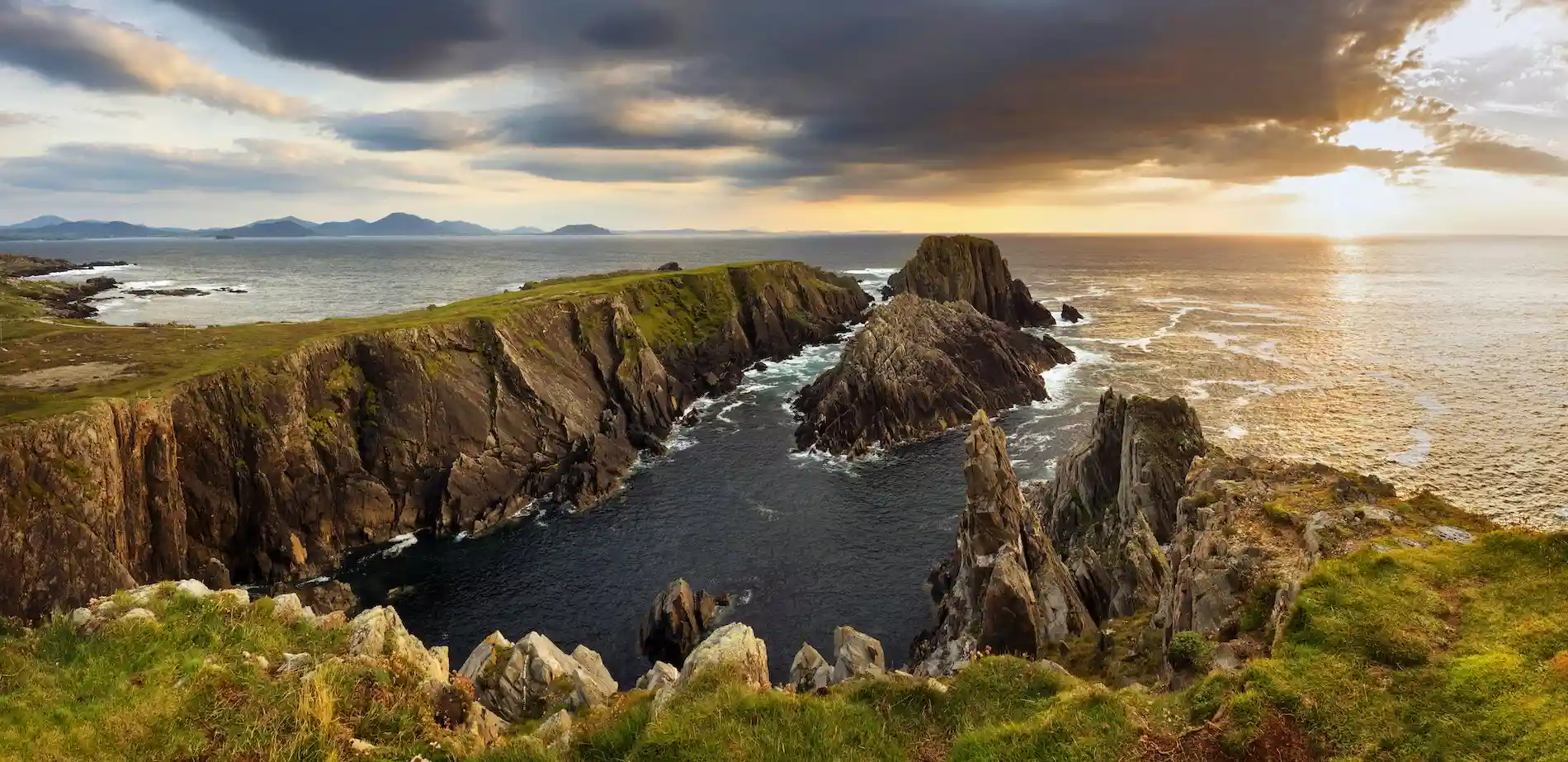
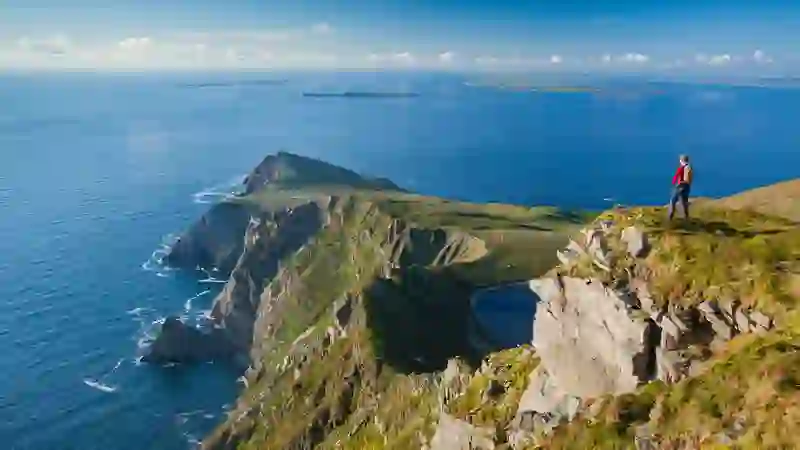
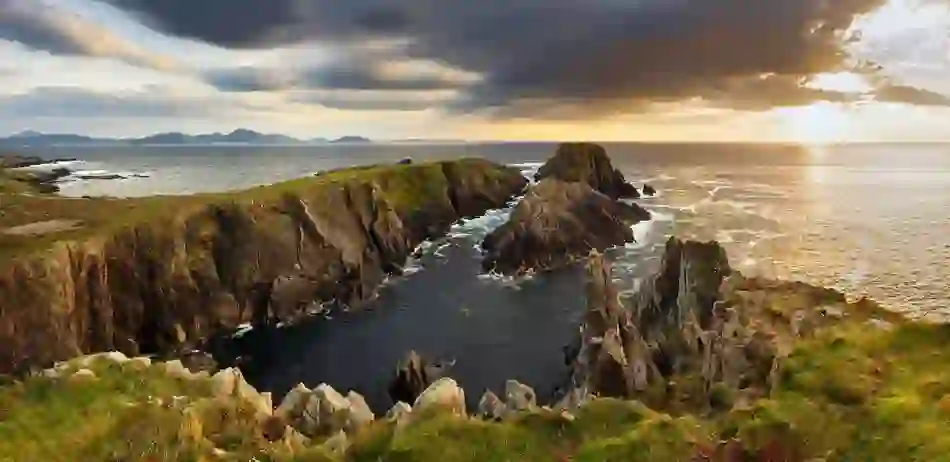
    Dramatic rocky cliffs and headlands on the Dingle Peninsula, featured in Star Wars: The Last Jedi filming. Dramatic rocky cliffs and headlands on the Dingle Peninsula, featured in Star Wars: The Last Jedi filming.
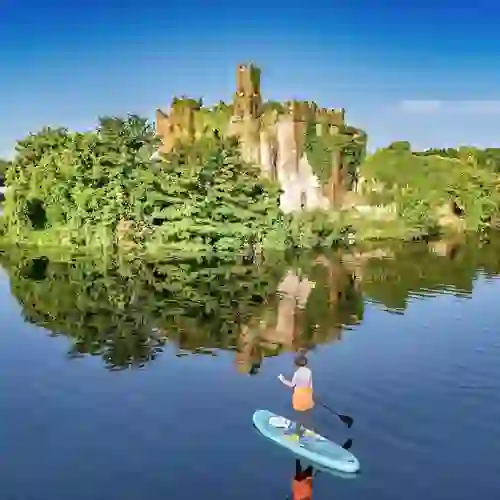
    Paddleboarder on Lough Key with McDermott’s Castle on Castle Island in County Roscommon. Paddleboarder on Lough Key with McDermott’s Castle on Castle Island in County Roscommon.
    The jewel in the crown of Roscommon’s natural beauty is Lough Key Forest Park. Tadhg Peavoy, The Irish Times
    County Roscommon FAQs
    Where is Roscommon?

    County Roscommon is located in Ireland’s Hidden Heartlands. It is found in Ireland’s north-central region and is within the province of Connacht. Roscommon is landlocked and is bordered by Sligo, Leitrim, Longford, Westmeath, Offaly, Galway and Mayo. The River Shannon runs along its eastern boundary.

    Is Roscommon town worth visiting?

    Yes, Roscommon town is worth visiting. It’s a place where you can uncover history and some very interesting sights such as Roscommon Castle. Built around 800 years ago by the Normans, it’s a huge structure that today lies in ruins.

    Next door to the castle is Loughnaneane Park, which boasts a wildflower meadow, ancient crannóg dwelling and a sculpture trail. At the town’s edge lies Roscommon Abbey, which was founded by the old king of the province and has survived both fire and a lightning strike. For great local food, drop into Gleesons, renowned for its warm hospitality and Manse Restaurant.

    What is County Roscommon famous for?

    Roscommon may not be a household name like some of its neighbouring counties, but there’s more than meets the eye here. For example, it’s the birthplace of Ireland’s first president, Douglas Hyde, and actor Chris O’Dowd. O’Dowd’s childhood stomping ground was Boyle, a busy market town located in the north of the county.

    The county is also famous for the Royal Site of Rathcroghan. This archaeological site is steeped in Irish mythology and has witnessed over 5,500 years of history.

    What's there to do in Roscommon?

    There’s lots to do in Roscommon. While the county may be a bit under-the-radar, it’s not short of great attractions. Visit the Royal Site of Rathcrogan and learn about the mysterious “Gate to Hell”. Spend the day in Lough Key Forest Park, and walk the trails, explore the lake and tackle the tree canopy walk.

    Or uncover an exceptional slice of history at Strokestown Park and the National Famine Museum, where the opulent lives of the aristocracy contrasts sharply with the poverty and destitution of their tenants.

    What does "Roscommon" mean in Irish?

    Roscommon comes from the Irish Ros Comáin, which means “Comán’s wood”. The name refers to Saint Comán, who founded a monastery in the area in the 5th or 6th century. The settlement that grew around it eventually became the town of Roscommon, and so the county got its name.

    Where are the best places to stay in County Roscommon?

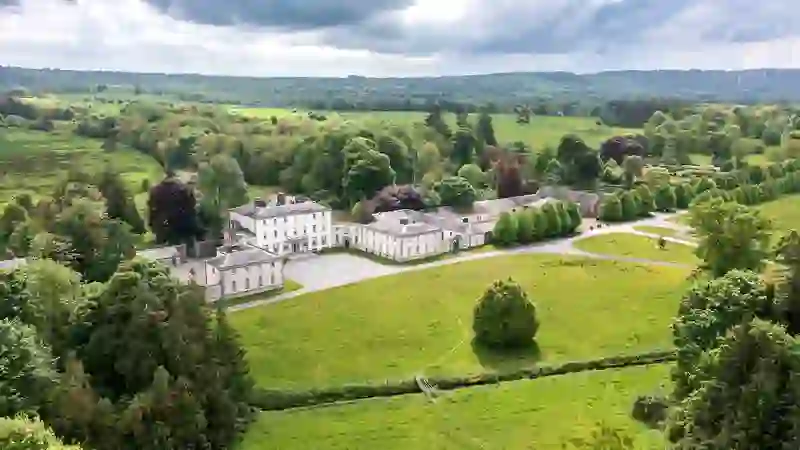
    One of the most beautiful places to stay in County Roscommon is Clonalis House in Castlerea. This esteemed estate boasts thousands of years of heritage and the house itself dates back to 1617. Stay in one of its self-catering cottages, complete with elegant interiors and wood-burning stoves.

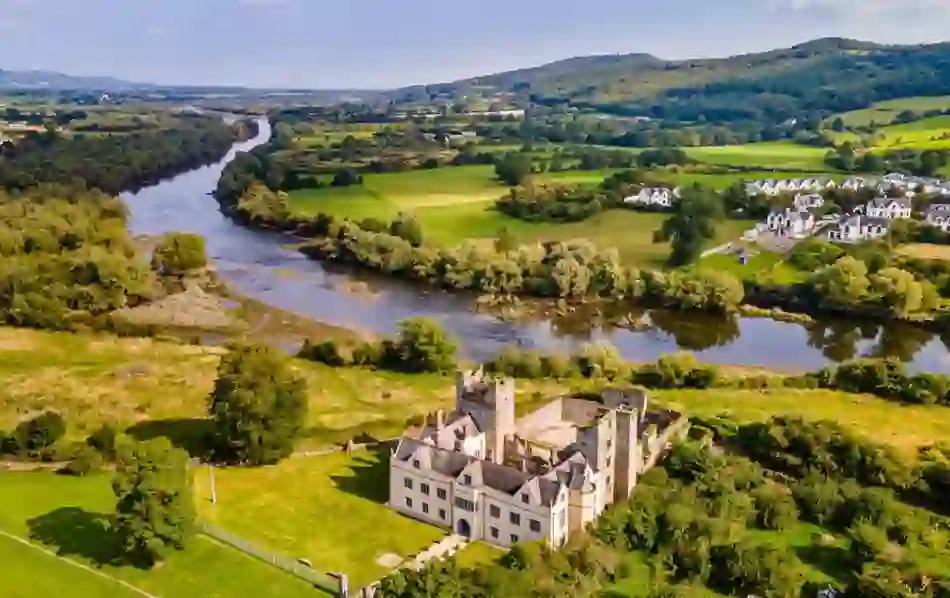
    Also in Roscommon, Castlecoote House is a charming 17th-century country house beside the River Suck, while 18th-century Kilronan Castle, overlooking Lough Meelagh, makes for a luxurious castle stay. Find more country house stays around Ireland. 

    In Roscommon town, Gleesons and the Abbey Hotel both offer comfortable, welcoming accommodation.

    Is Roscommon close to Dublin?

    Roscommon is not especially close to Dublin – it’s about 130km away. However, it doesn’t take too long to travel between the two. If you’re driving, it should take you a little less than 2 hours, depending on traffic. There is also a direct train that runs between Dublin and Roscommon that takes about 1 hour 50 minutes.